 Whatcom County
 What Lynden's Weather Actually Does to a Deck
Lynden sits in the Nooksack River valley, close enough to the coast to pick up plenty of moisture off the Sound but far enough inland that the bigger issue isn't salt air — it's water that just doesn't leave. Whatcom County gets long stretches of low cloud, drizzle, and fog that keep wood and composite surfaces damp for days at a time, especially from late fall through early spring. That's the environment a deck in Lynden has to survive, year after year.
Three things do most of the damage: standing moisture that never fully dries between rain events, moss and algae that take hold on any shaded or north-facing surface, and the freeze-thaw cycles that show up most winters even though hard freezes here aren't usually deep or long. None of these are dramatic on their own, but they're relentless, and a deck that wasn't built with them in mind starts showing problems within a few seasons — soft spots near the house, black streaking on boards, fasteners bleeding rust, stairs that get dangerously slick.
A deck built for a drier climate, or built to minimum code without much thought for how water actually moves through it, will age fast here. A deck built for Whatcom County conditions specifically holds up a lot longer, and it's not more expensive to do it right — it just requires knowing what actually matters in this climate versus what's optional elsewhere.
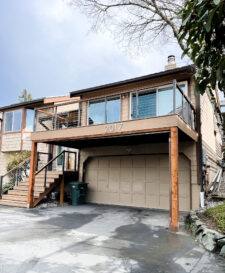
Decking Material Options for This Climate
Wood
Pressure-treated fir or hem-fir is still the most common decking material in this area, and it works fine as long as it's finished and maintained. Cedar looks better and resists rot naturally, but it's softer, shows wear faster underfoot, and costs more. Both need regular sealing or staining in a climate this wet — skip that maintenance for a couple of years and moss and gray weathering set in fast.
Composite
Composite decking has gotten a lot better over the last decade. It doesn't need staining, resists moss better than bare wood, and holds up well to constant damp exposure. The trade-off is upfront cost and the fact that not all composite is equal — cheaper capped-polymer boards can still trap moisture at cut ends or fastener points if they're not detailed correctly during install. We install several composite brands and are honest with clients about which lines perform well in a climate like ours versus which ones are better suited to drier regions.
PVC
Fully cellular PVC decking sheds water completely and won't absorb moisture at all, which makes it a strong option for shaded, low-airflow spots where moss is a constant fight. It costs more than composite and has a slightly different look and feel underfoot, which matters to some homeowners and not others.
| Material | Upfront Cost | Maintenance | Moss/Moisture Resistance | Typical Lifespan Here |
|---|---|---|---|---|
| Pressure-treated wood | Lowest | Seal/stain every 1-2 years | Fair if maintained | 10-15 years |
| Cedar | Moderate | Seal/stain every 1-2 years | Good if maintained | 15-20 years |
| Composite | Moderate-High | Occasional wash | Good | 20-30 years |
| PVC | Highest | Occasional wash | Excellent | 25-30+ years |
Getting the Structure Right: Ledger, Flashing, and Fasteners
Most deck failures we get called out to inspect in Lynden aren't decking problems — they're structural details that were done wrong from the start and stayed hidden under the boards until rot or rust made them obvious.
- Ledger board flashing: where the deck attaches to the house is the single most important detail on the whole project. Without proper metal flashing and a water-shedding gap, moisture wicks into the house rim joist and rots it from the inside, often for years before anyone notices.
- Joist tape: covering the tops of pressure-treated joists with a self-adhering waterproof tape keeps standing water out of screw holes and cut ends, which is where rot almost always starts first.
- Fasteners: in a climate this wet, standard galvanized screws corrode and streak faster than you'd expect. We use stainless steel or high-grade coated fasteners rated for ground contact and wet exposure, especially anywhere runoff collects.
- Airflow underneath: a deck built too close to grade, or boxed in without ventilation, traps moisture underneath and accelerates rot in the framing even if the surface looks fine.
None of this is visible once the deck is finished, which is exactly why it matters who builds it. A deck can look identical on day one whether these details were done right or skipped.
Footings, Soil, and Frost Depth in the Nooksack Valley
Lynden's soil tends toward the silty, sometimes high-water-table ground typical of the Nooksack River valley, which affects how footings need to be poured. Footings that are too shallow or poured on ground that hasn't been checked for drainage can shift over a few wet winters, leading to a deck that develops a lean or bounce even though the decking itself is fine.
Whatcom County's frost depth requirements aren't extreme compared to colder parts of the state, but footings still need to go below the frost line and bear on solid, undisturbed soil — not just fill dirt or topsoil. On a lot with poor drainage or a higher water table, that sometimes means adjusting footing placement or depth beyond the bare code minimum to keep the structure stable long-term. This is exactly the kind of judgment call that comes from having actually built footings in this valley before, not just read the code book.
Permits and Code in Lynden
Most custom decks in Lynden require a building permit, particularly once you're above a certain height off grade or attaching structurally to the house. Guardrail height, baluster spacing, stair geometry, and footing depth are all inspected items, and getting them wrong means a failed inspection and rework — which costs more time and money than doing it correctly the first time.
We handle permitting as part of the project rather than leaving it to the homeowner to sort out with the county or city. Knowing the local permitting process and what inspectors here actually look for keeps the project moving instead of stalling out waiting on corrections.
What Affects the Cost of a Custom Deck
| Factor | Why It Matters |
|---|---|
| Size and shape | Multi-level decks, curves, and cutouts cost more in labor and material than a simple rectangle |
| Decking material | Wood, composite, and PVC span a wide cost range, as shown above |
| Height off grade | Taller decks need more substantial framing, footings, and stair runs |
| Railing style | Basic wood rail vs. cable, glass, or composite rail systems affects both cost and maintenance |
| Site access and grading | Sloped or hard-to-access lots (common around the valley) add labor for footings and material staging |
| Roof or cover integration | Combining a deck with a covered porch or roof structure adds complexity and cost |
Because of this range, we don't quote decks off a phone call — every estimate is based on an actual look at the site, the grade, and what the homeowner wants out of the space.
Our Process From Estimate to Finished Deck
- On-site walkthrough: we look at grade, drainage, existing structure attachment points, and sun/shade exposure before talking materials.
- Design and material selection: honest conversation about what fits the budget and holds up in this climate, not just what looks best in a brochure.
- Permitting: we prepare and submit what's needed for the local jurisdiction and schedule around inspection requirements.
- Footings and framing: built to the depth and spacing the soil and span actually call for, with flashing and joist protection installed correctly the first time.
- Decking, railing, and stairs: installed with fastening and gapping appropriate for wet-climate expansion and contraction.
- Final walkthrough: we go over maintenance expectations so the deck holds up the way it's supposed to.
Keeping Your Deck Looking Good
Whatever material you choose, a little seasonal attention goes a long way in this climate. Here's what we tell every Lynden homeowner:
- Sweep debris off the deck regularly, especially in fall — trapped leaves hold moisture and feed moss growth
- Wash the surface at least once a year with a deck cleaner or diluted bleach solution to knock back algae and moss before it takes hold
- Reseal or restain wood decking every 1-2 years depending on sun exposure and traffic
- Check that gaps between boards stay clear so water keeps draining through instead of pooling
- Look underneath once a year for signs of moisture staining, sagging, or fastener corrosion
- Keep gutters and downspouts near the deck clear so runoff isn't dumping directly onto or under it
If you're planning a custom deck in Lynden and want it built to actually hold up to Whatcom County weather, we're happy to come take a look and put together a free, no-pressure estimate. Use the form below to get started.