 Whatcom County
 Cordata Windows Take a Different Kind of Beating
Cordata sits on the north side of Bellingham, close enough to the water to pick up salt-tinged marine air, and squarely inside the wet, gray stretch of Whatcom County weather that runs from October through May. That combination is hard on windows in ways that don't show up right away. Salt air accelerates corrosion on hardware and metal components. Driving rain — the kind that comes in sideways during a fall or winter storm — tests every seam, sill, and piece of flashing around a window opening. And the long moss season keeps roofs, siding, and window sills damp for weeks at a stretch, which is exactly the environment mold, algae, and slow wood rot need to get established.
None of this means Cordata homes need exotic products. It means the installation has to be done correctly, with materials and details chosen for a marine climate rather than a catalog photo. A window that performs fine in a dry inland climate can fail early here if it's installed without the right flashing sequence or the wrong sealant for constant moisture cycling.
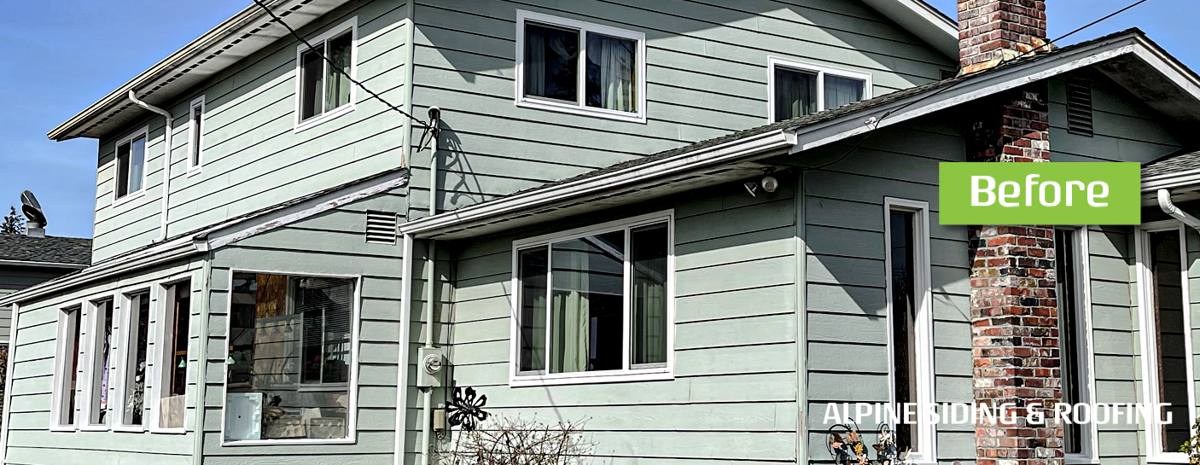
Signs a Cordata Home's Windows Need Attention
Most window problems in this area develop slowly, so homeowners often live with them for a season or two before calling anyone. Worth acting on sooner rather than later:
- Fogging or a hazy film between the panes of a double-pane window — the seal has failed and the insulating gas is gone
- Windows that stick, won't latch fully, or have gotten harder to open — often swelling from moisture intrusion at the frame
- Soft or discolored wood at the sill or lower corners, or paint that's bubbling or peeling right at the casing
- A noticeable draft or cold spot near the window even when it's fully closed and latched
- Condensation forming on the inside of the glass regularly, especially in bedrooms and bathrooms
- A jump in heating costs with no other explanation
Any one of these on its own might just mean a repair. Several together, especially on an older home, usually points to windows that are past the point where caulk and weatherstripping fix the problem.
What a Correct Custom Window Installation Actually Involves
Why "custom" matters
Older homes in this part of Whatcom County rarely have perfectly square, standard-sized openings, especially after decades of settling. A custom window job means the opening is measured on site, not assumed from a builder's spec sheet, and the unit ordered or built to match. That's different from a big-box replacement window forced into an opening it doesn't quite fit, which almost always means gaps that get packed with extra caulk instead of solved properly.
The details that actually keep water out
The glass and frame get most of the attention, but the flashing details around the opening are what actually determine whether a window stays dry through a wet Whatcom County winter. A correct install includes:
- A sloped sill pan so any water that gets past the window sheds outward instead of pooling at the frame
- Flashing tape or a housewrap flashing integration that ties the window into the wall's water-resistive barrier, shingle-style, so water is always directed down and out
- Backer rod and the right sealant at the exterior joint — not just a bead of caulk over a gap
- Proper shimming so the unit is plumb, level, and square before it's fastened, which affects both how it seals and how smoothly it operates for years
- Insulation in the gap between the rough opening and the window frame, without overpacking it in a way that bows the frame
Skip any of these and the window can look fine for a year or two while water quietly works its way into the framing behind it. That's the kind of damage that's expensive to find and expensive to fix once it's found.
Choosing Materials for a Marine Climate
There's no single "best" window material — the right choice depends on the home, the budget, and how much upkeep the homeowner wants to take on. Here's how the common options hold up specifically in a damp, salt-air climate like Cordata's:
| Material | Moisture & Salt Air Behavior | Maintenance | Typical Lifespan |
|---|---|---|---|
| Vinyl | Won't rot or corrode; performs well in humidity and salt air | Low — occasional cleaning, no painting | 20-30+ years |
| Fiberglass | Very stable in wet/dry cycling, minimal expansion or contraction | Low — can be painted if desired | 30-40+ years |
| Wood (clad exterior) | Good if the exterior cladding stays intact; exposed wood is vulnerable to Whatcom County's wet season | Higher — exposed wood surfaces need monitoring and occasional refinishing | 20-30 years with upkeep |
| Aluminum | Corrosion-resistant coatings help, but bare aluminum is more sensitive to salt air over time | Moderate | 20-30 years |
For most Cordata homes, we lean toward vinyl or fiberglass for exposed elevations because they hold up to constant moisture and salt without ongoing maintenance. Wood-clad windows still make sense on homes where the look matters more and the homeowner is willing to keep up with them — it's a trade-off we're upfront about rather than a product we avoid mentioning.
Our Process
- On-site assessment. We look at the existing windows, the condition of the framing around them, and how water has been moving (or not moving) around the current openings.
- Measure and plan. Every opening gets measured individually. We flag anything out of square or any sign of rot that needs to be addressed before a new window goes in.
- Product selection. We walk through material, glazing, and style options based on the home's exposure, the budget, and how the windows tie into any siding work happening at the same time.
- Removal and prep. Old units come out, and we inspect the framing underneath. Any soft wood or existing water damage gets repaired before anything new goes back in — installing a new window over a rotten sill just hides the problem.
- Flashing and installation. Sill pan, flashing integration, shimming, and sealing, done in the sequence that actually sheds water.
- Trim and finish. Interior and exterior trim is fitted and finished to match the home.
- Walkthrough. We check operation on every window and go over care before we consider the job done.
What Drives the Cost
Every home is different, so we don't quote a flat number without seeing the job, but these are the factors that move the price up or down:
| Factor | How It Affects Cost |
|---|---|
| Number and size of windows | More openings and larger units mean more material and labor |
| Material chosen | Vinyl is typically the most budget-friendly; fiberglass and wood-clad cost more upfront |
| Glazing package | Dual-pane with low-E coatings costs more than basic glazing but pays back in comfort and energy use |
| Condition of existing framing | Rot or water damage found during tear-out adds repair work before the new window goes in |
| Access and home height | Second-story or hard-to-reach windows take more time and sometimes equipment |
| Trim and siding integration | Matching existing trim or coordinating with a siding project affects labor and materials |
Why a Crew That Already Works in Cordata Matters
Window installation isn't just a product — it's a job that has to account for the specific conditions of the home and the area it's in. A crew that regularly works in Cordata and the surrounding parts of Whatcom County has already seen how homes in this area age: where moisture tends to collect, which elevations take the worst of the driving rain, and how moss and algae build up on surfaces that don't get much sun through the winter. That familiarity shows up in small decisions during the job — where to add extra flashing, which sealant holds up best given the exposure, how to sequence work around the wet season instead of racing it.
There's also a practical side to hiring local: faster response if a problem shows up after the install, no guesswork on local permitting requirements, and a crew that's still around the following year if a warranty question comes up. That matters more here than in a drier climate, since problems caused by water intrusion don't always show themselves right away.
Keeping New Windows Performing Through Whatcom County's Wet Season
A correctly installed window shouldn't need much attention, but a little seasonal care goes a long way in this climate:
- Clear debris and moss from sills and tracks before the fall rains set in
- Check that exterior caulking around the frame stays intact — hairline gaps are worth resealing before winter, not after
- Wipe down interior sills if condensation collects, especially in bathrooms and bedrooms with less airflow
- Operate every window at least a few times through the winter so hardware doesn't seize up from sitting
- Watch for any soft spots developing at the sill or trim and address them early rather than waiting
If you're weighing window replacement for a home in Cordata, we're happy to take a look and give you a straight assessment of what your windows actually need — no pressure, no upsell. Reach out for a free estimate using the form below.