 Whatcom County
 Deck Replacement in Columbia's Bellingham Climate
Columbia is one of Bellingham's older, established neighborhoods, and a lot of the decks attached to homes there were built decades ago — sound for their time, but framed with standard lumber and hardware that was never spec'd for the kind of moisture load this part of Whatcom County sees year after year. Salt air drifting in off Bellingham Bay, driving rain that comes in sideways during fall and winter storms, and a moss season that runs most months of the year all take a steady toll on an exterior structure that has no roof over it. A deck absorbs that exposure directly, and over enough seasons it shows.
At some point on an aging Columbia deck, repair stops being the honest answer and replacement becomes the more sensible one — not because a contractor wants to sell a bigger job, but because patching new boards onto old, moisture-compromised framing rarely holds up the way a full rebuild does. This page covers how to tell which situation you're actually in, what a correct deck replacement involves in this climate, and how our process works for a project in this specific Bellingham neighborhood.
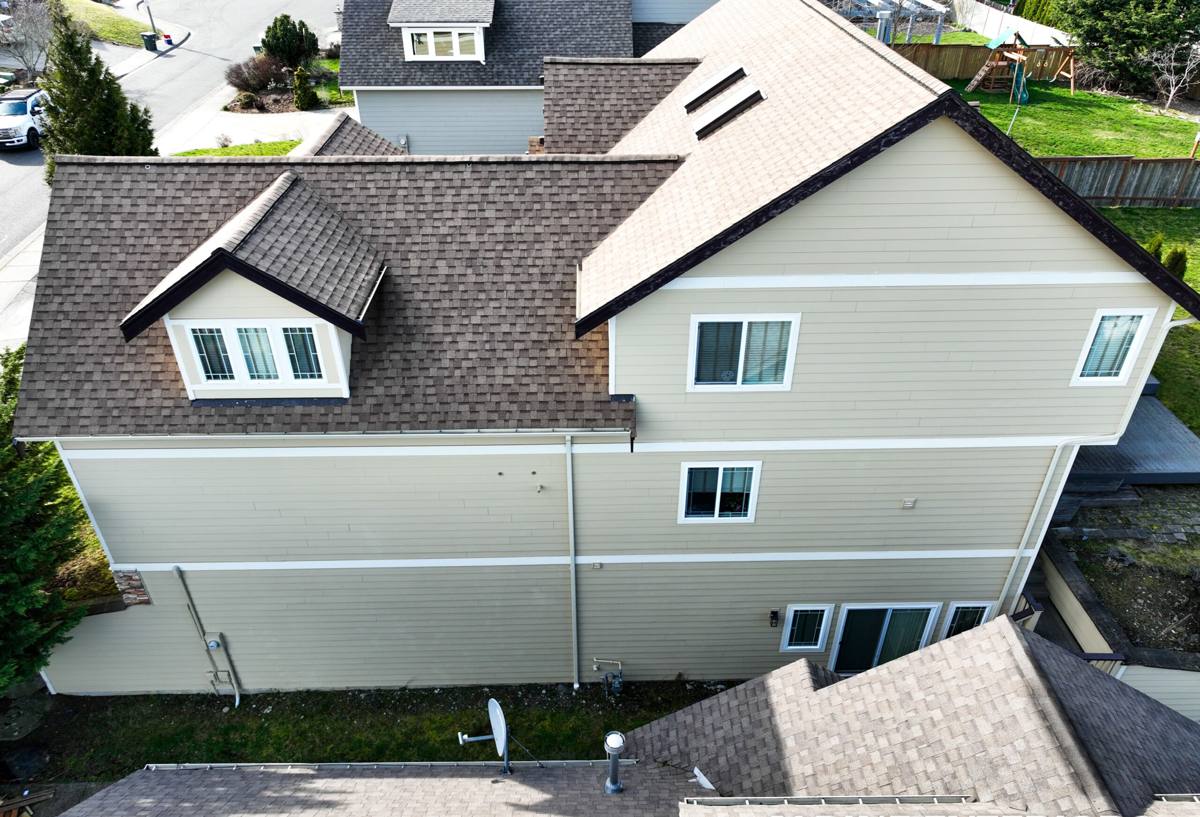
Repair or Replace? Reading the Signs on an Older Columbia Deck
Structural Signs That Point to Replacement
Soft or spongy decking, especially near the ledger board or around stair stringers, usually means moisture has already worked into the wood fiber underneath the surface, not just the top coating. Wobbly posts, joists that sag or show visible rot when you look underneath, and ledger connections with no flashing at all — common on homes built before that detail was standard code — are all structural issues rather than cosmetic ones. None of those get better with a fresh coat of stain or a handful of swapped boards.
Cosmetic Wear That Doesn't Necessarily Mean Replacement
Graying wood, surface mildew, or a light dusting of moss on an otherwise sound deck is often just weathering, and a cleaning and refinishing can address it without a full rebuild. The distinction matters because it's easy to look at a tired, dull-looking deck and assume the worst, or the opposite — assume a coat of sealant will fix a problem that's actually in the framing. A proper inspection looks underneath the surface, not just at it.
Where the Cost Math Tips Toward Replacement
As a rule of thumb, once repair costs start approaching half to two-thirds of what a full replacement would run, replacement is usually the better value — you're not paying twice to eventually redo work that's still sitting on compromised framing. The table below is a general guide, not a diagnosis; an actual inspection is what determines which column your deck falls into.
| What You're Seeing | Likely Cause | Usually Repair or Replace |
|---|---|---|
| Faded, graying boards with no soft spots | UV and weather exposure, surface-level only | Repair (clean/refinish or spot-replace boards) |
| Soft or spongy boards near the ledger | Moisture intrusion at the house connection | Replace — often affects framing too |
| Loose or wobbly railing posts | Post rot or corroded fasteners at the base | Depends on framing condition underneath |
| Visible rot or sagging in joists | Sustained moisture in the substructure | Replace |
| Moss buildup on the surface only | Shade, poor drainage, normal climate exposure | Repair (clean and improve drainage) |
| No ledger flashing present | Older construction, pre-dates current code detail | Replace — this is a structural gap, not cosmetic |
What a Correct Deck Replacement Involves
A full tear-out gives us something a repair never does: a clear look at the house's rim joist and framing behind the old ledger connection, which is where hidden rot most often hides on an older Columbia home. A replacement done right includes checking that structure before anything new goes up, not just building over whatever was there. Beyond that, a correct rebuild covers:
- Full removal of the old decking, railing, and framing down to sound structure, with the house connection inspected and repaired if needed
- New or reinforced footings where the existing ones are undersized, frost-heaved, or set too shallow for current code
- Framing sized and spaced to match the specific decking product going back on, rather than a generic layout
- Stainless or coastal-grade corrosion-resistant fasteners throughout, since standard hardware starts corroding faster in this area's persistent moisture
- Proper ledger flashing at the house connection — the single most common failure point we find tearing out older decks in this neighborhood
- Correct board gapping for drainage, so wind-driven rain and standing moisture can actually clear instead of sitting between boards
- Guardrail height and stair specs brought up to current code, which older decks in Columbia frequently predate
- Grading and airflow underneath the deck so moisture doesn't sit against the new framing between storms
Skip the framing and drainage details and a new deck can still look sharp for a season or two before the same problems that took down the old one start over again underneath the new boards.
Decking Material Choices for Columbia's Marine Climate
Bellingham's marine climate makes material choice matter more than it would somewhere drier. The three categories most homeowners weigh are wood, capped composite, and cellular PVC, and each behaves differently under sustained moisture and a long moss season.
Wood
Pressure-treated lumber and cedar remain popular for their upfront cost and traditional look, but both need regular sealing or staining to hold up against this area's rainfall, and both show moss and graying faster than capped products once maintenance lapses.
Capped Composite
Capped composite boards have a plastic shell around a wood-fiber core, which resists moisture absorption and staining far better than uncapped composite or raw wood. In a neighborhood with as much cumulative moisture exposure as Columbia sees, that cap layer does real, ongoing work rather than just adding a warranty line item.
Cellular PVC
PVC decking has no wood fiber at all, so it doesn't absorb moisture at cut edges or fastener holes the way even capped composite can over time. It costs more up front and can flex slightly more under heavy point loads, but for a shaded deck or one that holds moisture longer than the rest of the yard, some homeowners find the added resistance worth it.
| Material | Moisture & Salt-Air Handling | Moss Resistance | Ongoing Upkeep |
|---|---|---|---|
| Cellular PVC | Excellent — no wood fiber to absorb moisture | Strong, smooth non-porous surface | Occasional washing |
| Capped composite | Strong — cap layer resists moisture and staining | Good on most product lines | Occasional washing |
| Cedar | Moderate — needs sealing to hold up over time | Fair when sealed and maintained | Regular oiling or sealing |
| Pressure-treated wood | Weak against sustained moisture without upkeep | Poor without regular treatment | Regular sealing or staining |
How Our Deck Replacement Process Works
We start with a site visit to assess what's actually going on — probing for soft spots, checking the ledger connection and framing underneath, and looking at drainage and grade around the deck footprint. That inspection is what tells us honestly whether you're looking at a repair or a full replacement, and we'll say so plainly either way rather than defaulting to the bigger job.
Once replacement is the right call, permitting in Bellingham and the rest of Whatcom County generally covers structural, setback, and guardrail requirements, and we handle that process rather than leaving it on the homeowner. Demo comes next, with a real look at the rim joist and house connection before anything new goes up. From there the build follows the sequence above: footings and framing sized for the site's actual exposure, then decking, railing, and stairs in the material you've chosen. We finish with a walkthrough covering what that specific material needs going forward, which for most modern decking products is minimal but not nothing.
Keeping a New Deck Healthy in This Climate
Even a correctly built deck in a well-suited material needs some routine attention in Whatcom County's climate to reach its full lifespan. Worth keeping on a seasonal checklist:
- Rinse the deck surface periodically to clear organic buildup before it works into the material or cap layer
- Keep gaps between boards clear of leaves and debris so water and air can move through the way the design intends
- Check railing posts and hardware once a year for early corrosion or loosening, ideally before the wet season sets in
- Direct downspouts and roof runoff away from the deck footprint rather than letting it pool against posts or footings
- Trim back overhanging branches that hold moisture against the surface or keep it shaded longer than necessary
- Address any soft framing or standing water underneath right away — that's structural, and it won't improve on its own
What Affects the Cost of a Deck Replacement in Columbia
Every deck replacement is priced around the specific site and scope, but a few factors consistently move the number more than homeowners expect:
| Factor | Why It Matters |
|---|---|
| Deck size and shape | More square footage and complex layouts (multi-level, angles, wraparounds) mean more material and labor |
| Decking material chosen | Wood, capped composite, and PVC sit at different price points and affect long-term upkeep costs too |
| Condition of existing footings | Footings that meet current code can sometimes be reused; undersized or frost-heaved ones need replacing |
| Railing and stair design | Cable rail, glass panels, and custom stair configurations cost more than standard baluster railing |
| Ledger and house connection repairs | Hidden rot found at demo can add scope once the old ledger comes off |
| Permit requirements | Structural and guardrail code updates on an older deck can add work beyond a like-for-like swap |
We lay out these factors specifically for your project during the site visit, so the estimate reflects your actual deck rather than a generic per-square-foot number.
Why a Crew That Works Columbia Regularly Matters
Columbia's mix of older homes means we run into the same handful of issues on deck replacements there more often than in newer parts of Whatcom County — missing or inadequate ledger flashing, footings that no longer meet current code, and framing sized for a lighter decking product than what's often chosen today. Working this neighborhood regularly means we're not guessing at those conditions when we open up your deck; we've seen the pattern enough times to know where to look first and what's actually worth fixing versus what's an upsell.
That familiarity also shows up in smaller judgment calls — matching a new deck's railing style to an older home's existing character, or being straightforward about whether your deck genuinely needs replacing this year or can reasonably wait a season with some interim maintenance.
Get a Straight Answer About Your Deck
Whether your Columbia deck is showing clear structural problems or you just want an honest read on repair versus replacement, we're happy to walk the site with you and lay out the options plainly. Reach out below for a free, no-pressure estimate.