 Whatcom County
 Why Blaine's Marine Climate Is Hard on Siding
Blaine sits right at the edge of the Salish Sea, in the northwest corner of Whatcom County, and that location shapes what a house needs from its exterior. Salt-laden air off the water, wind-driven rain rolling in off the marine layer, and long stretches of gray, damp weather all put steady pressure on siding year after year. A product or installation that would hold up fine somewhere inland or drier can fail early here, and homeowners in Blaine often see problems on their siding sooner than friends or family living even twenty miles inland.
Salt Air and Metal Fatigue
Airborne salt doesn't just affect boats and railings. It settles on exterior walls, works into fastener heads, trim seams, and any exposed metal flashing, and accelerates corrosion over time. Cheap or under-spec'd fasteners are one of the most common causes of early siding failure in coastal Whatcom County homes — the siding material itself may be fine, but the fasteners holding it on aren't rated for the exposure.
Wind-Driven Rain at the Wall
Storms coming off the water bring rain sideways, not straight down. That means every horizontal joint, window head, and butt seam on a wall is a potential entry point for water, not just the top of the wall. Siding systems and installation details that assume rain falls straight down and sheds off a roof simply aren't built for this kind of exposure.
Moss, Algae, and Shaded Walls
Mild temperatures, high humidity, and long overcast stretches make Whatcom County one of the more moss-friendly climates in the country. North-facing walls, areas shaded by trees or neighboring structures, and anywhere airflow is restricted are prone to sustained moisture and organic growth on siding surfaces. Over years, that constant dampness degrades paint film and, on the wrong substrate, the material underneath it.
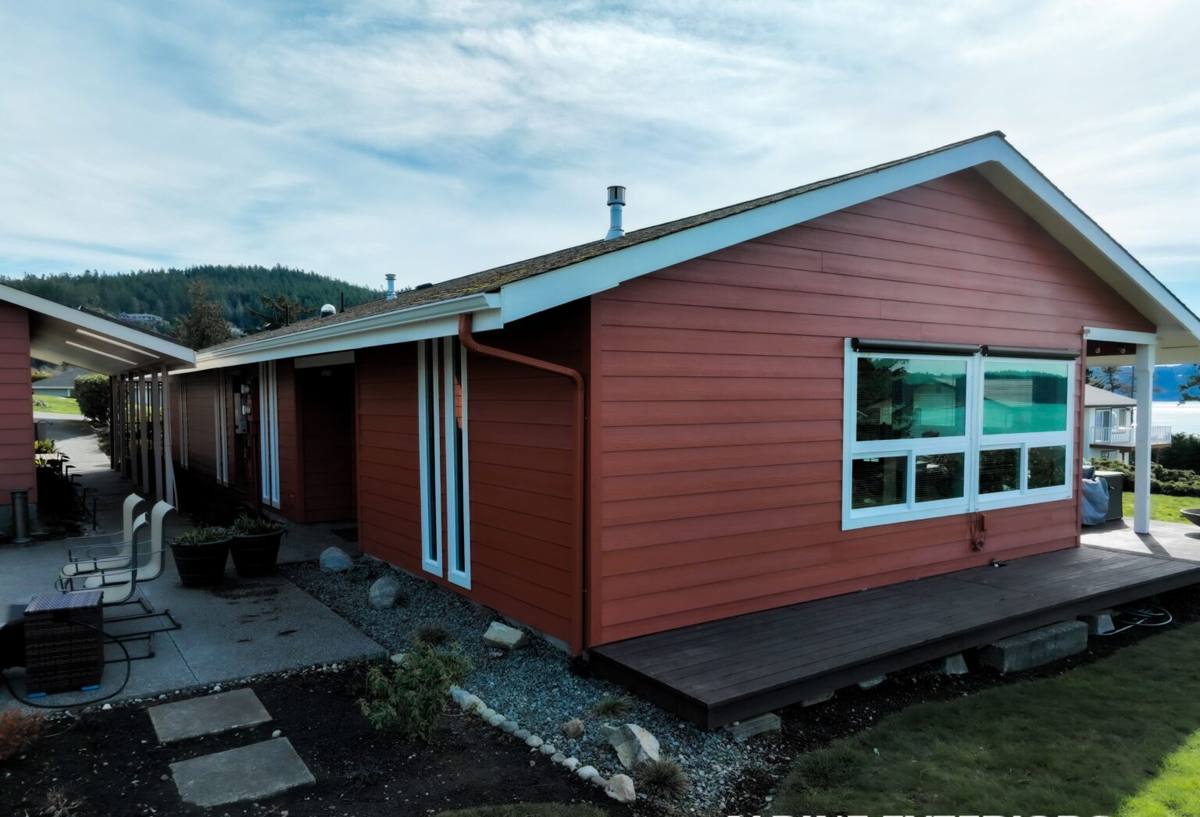
What a Correct Siding Installation Actually Requires
Siding is a system, not just a decorative skin. The visible boards get the attention, but the layers behind them — and the details most homeowners never see — are what actually determine whether a house stays dry for the next 30-plus years.
The Water-Resistive Barrier Comes First
Before a single piece of siding goes up, the wall needs a continuous, correctly lapped weather-resistive barrier. Every seam, tear, and staple hole is a potential path for water. In a climate that sees as much sustained rain as Blaine does, gaps in this layer are one of the leading causes of hidden rot behind otherwise good-looking siding.
Flashing Every Penetration
Windows, doors, hose bibs, light fixtures, and vents all interrupt the wall plane, and each one needs proper flashing integrated with the water-resistive barrier so water sheds outward and down, never behind the siding. Wind-driven rain finds these gaps first.
Fastening to Manufacturer Spec
Fastener type, length, spacing, and placement aren't optional details — they're engineered requirements tied to the siding manufacturer's warranty and to real-world wind and moisture performance. Corrosion-resistant fasteners matter more here than in drier inland climates, and getting the nailing pattern wrong is one of the most common ways installers void a warranty without the homeowner ever knowing.
A Drainage Gap, Not a Sealed Wall
Modern siding installation relies on a drainage plane — a small gap or rain screen behind the siding that lets any moisture that does get in drain and dry out rather than sit against the wall. Sealing every seam airtight sounds protective but often traps moisture instead of releasing it, which is the opposite of what a wet climate like this one needs.
Why We Install Only James Hardie Fiber Cement in Blaine
We made a decision to standardize on James Hardie fiber cement siding across every job we do, including here in Blaine, and we don't install vinyl, LP SmartSide, or other fiber cement brands. Fiber cement doesn't absorb water the way engineered wood products can, and it's non-combustible, which matters given the wildfire smoke and dry-season fire risk the Pacific Northwest has seen in recent years. Hardie's factory-applied ColorPlus finish is baked on and warranted separately from field-applied paint, which holds up better against the UV exposure and constant moisture cycling that Whatcom County walls experience. Hardie also engineers specific product lines for different climate exposures, which lets us match the assembly to a genuinely wet, marine environment rather than installing a one-size-fits-all product. The company backs its material with a strong, transferable limited warranty, which matters most in a climate that's actively working against a home's exterior every day of the year.
How Our Installation Process Works
- On-site assessment — we look at wall orientation, sun and shade exposure, drainage around the foundation, and the condition of the sheathing before quoting anything.
- Tear-off and inspection — removing the old siding lets us actually see the sheathing and framing underneath and catch any hidden water damage before it's covered up again.
- Repair as needed — any soft, rotted, or compromised sheathing gets replaced; covering it over with new siding just hides a problem that will resurface.
- Weather-resistive barrier installation — installed and lapped correctly, shingle-style, so water always sheds outward and down.
- Flashing at every penetration — windows, doors, and any wall-mounted fixtures get integrated flashing before siding closes over them.
- Hardie installation with proper clearances and fastening — following manufacturer spacing, fastener type, and ground and roof clearances to the letter.
- Sealant only where it belongs — caulking penetrations and specific joints per manufacturer guidance, not sealing the whole wall airtight.
- Final walk-through and warranty registration — confirming the finished work with the homeowner and getting the manufacturer warranty properly on file.
Signs Your Blaine Home May Need New Siding
- Moss or algae staining that comes back within months of cleaning it off
- Soft spots, bubbling, or a spongy feel when you press on the siding
- Paint that's peeling, chalking, or failing well before you'd expect
- Visible warping, cupping, or separation at board seams
- Persistent drafts or a noticeable jump in heating costs
- Gaps or open joints around trim, windows, or corners where wind-driven rain can get behind the wall
- A musty smell near exterior walls, especially on north-facing or shaded sides
Cost Factors for Siding Installation in Blaine
Every home is different, and we won't quote a number without seeing the house, but these are the factors that actually move the price up or down on a Whatcom County siding job.
| Factor | Why It Matters |
|---|---|
| Home size and number of stories | More wall area and taller walls mean more material, more labor, and more staging or lift equipment |
| Condition of existing sheathing | Hidden rot found during tear-off requires repair before new siding goes on — this is common on older homes near the water |
| Trim and architectural detail | Homes with lots of corners, dormers, or trim work take more time to flash and finish correctly |
| Siding profile and finish selected | Lap width, texture, and color all affect material cost and installation time |
| Site access | Tight lots, fencing, or landscaping close to the house can slow down tear-off and staging |
| Permitting and inspections | Local permit requirements add administrative time but are part of doing the job correctly |
Why Hiring a Crew That Already Works in Blaine Matters
Siding installation isn't identical everywhere in Whatcom County, even though the county isn't large. A crew that regularly works close to the water knows to spec corrosion-resistant fasteners without being asked, knows which walls in a given lot are going to fight moss no matter what, and has already worked through the local permitting process enough times to not slow a project down. They've also seen what actually fails on homes in this specific exposure — not in a training manual, but on real houses a few miles away — and that experience shapes decisions on flashing details, fastener choice, and where to spend extra care versus where standard practice is enough.
Local Scheduling Around the Weather
Whatcom County's wet season isn't a minor inconvenience for siding work — it dictates when tear-off and installation can safely happen without exposing open walls to rain. A crew that works this area regularly plans around that reality instead of learning it mid-project.
What to Expect After Installation
A correctly installed James Hardie system in this climate is genuinely low-maintenance, but low-maintenance isn't the same as no-maintenance. Plan on an occasional gentle rinse to keep salt residue and organic growth from building up, especially on shaded or north-facing walls. Keep gutters clear so water isn't overflowing down the face of the siding. ColorPlus-finished siding is not expected to need repainting on the same schedule as field-painted wood or fiber cement, but it's worth a visual check each year, along with a look at caulking around windows and penetrations to catch any joint that's opened up before it becomes a water problem.
If your Blaine home's siding is showing its age, or you're planning ahead rather than waiting for a problem, we're happy to take a look and walk you through what we're seeing — no pressure, no obligation. Fill out the form below for a free estimate.