 Whatcom County
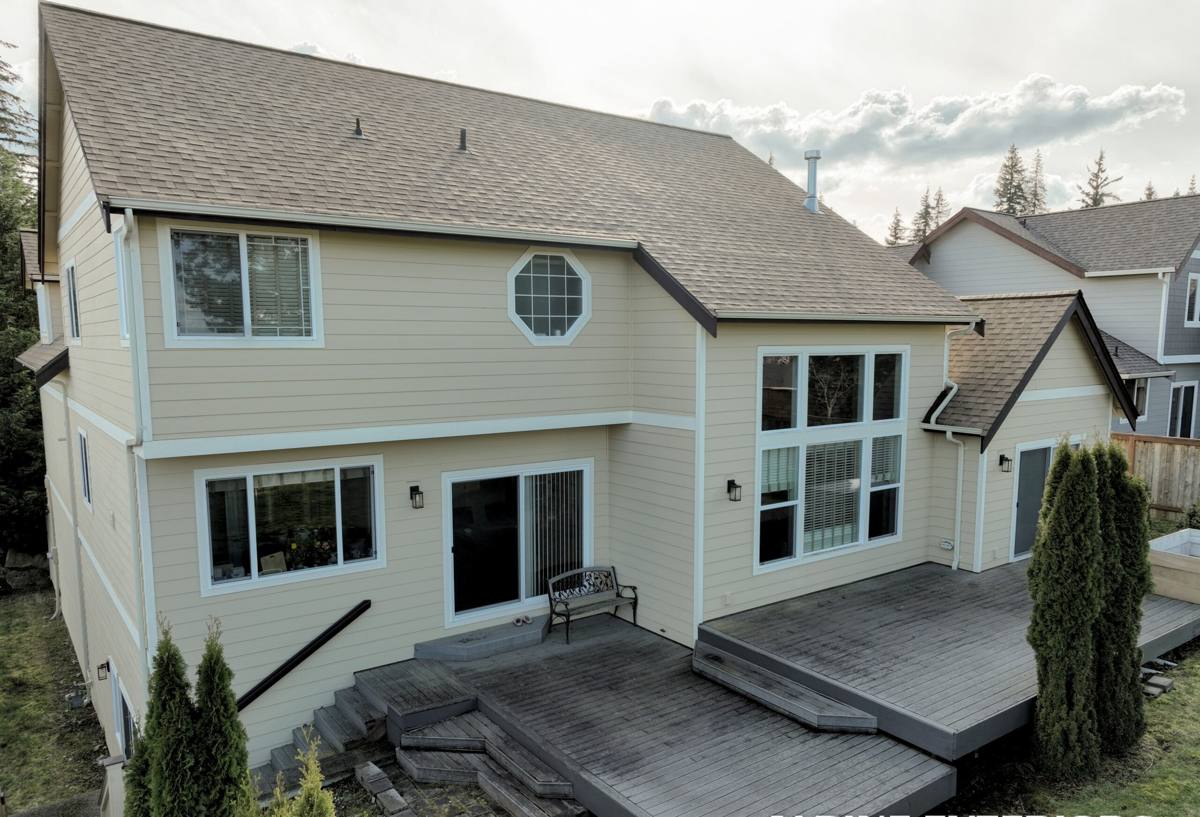
 Building a Deck That Holds Up in Blaine's Climate
Blaine sits right on the water, at the northern edge of Whatcom County, which means any deck built here deals with a combination most inland Washington towns don't: salt-laden air off the bay, long stretches of driving rain through fall and winter, and a moss season that can run most of the year in shaded yards. A deck that would be perfectly fine in a drier climate can start showing problems here in just a few seasons if it wasn't built with these conditions in mind. That's not a knock on any particular material or crew — it's just what this stretch of coastline does to wood, metal, and fasteners over time.
A correctly built Blaine deck isn't a different product than a deck anywhere else. It's the same structural principles — proper footings, correct spans, solid connections — applied with material choices and detailing that account for salt exposure, standing moisture, and shade-driven moss growth. Get those details right at the start and a deck stays solid and safe for decades. Skip them and you're looking at premature fastener corrosion, soft framing, and a slick, moss-covered surface within a few years.
What Salt Air and Rain Actually Do to a Deck
Coastal salt air accelerates corrosion in anything metal — screws, joist hangers, bolts, and flashing. Ordinary hardware that would last for years inland can start rusting and staining within a couple of seasons this close to the water. Rain is the other half of the equation: Whatcom County gets extended wet periods, not just occasional showers, so any spot on a deck where water can sit — a poorly sloped ledger, a gap that traps debris, end grain that isn't sealed — becomes a rot risk over time.
Moss adds a third factor that's easy to underestimate. Shaded decks, north-facing walls, and areas under trees stay damp longer, and moss and algae take hold on surfaces that don't get much direct sun or airflow. Beyond making a deck surface slippery, a moss layer holds moisture against the decking material, which shortens the life of anything not built to handle sustained dampness.
The Three Things We Design Around
- Corrosion resistance — hardware and fasteners rated for coastal or marine-grade exposure, not standard exterior-grade
- Drainage and airflow — framing and decking gaps that let water move through and off the structure instead of pooling
- Surface durability — materials and finishes that resist moss and mildew staining without constant upkeep
Choosing the Right Decking Material
There isn't one "best" decking material for every Blaine home — the right choice depends on budget, how much maintenance you want to do, and how shaded or exposed the site is. Here's how the common options actually perform in this climate:
| Material | Moisture & Moss Resistance | Maintenance | Typical Lifespan |
|---|---|---|---|
| Pressure-treated pine/fir | Fair — needs sealing to perform well near the water | Annual cleaning and re-sealing recommended | 10–15 years with upkeep |
| Western red cedar | Good natural resistance, but still needs periodic finish | Cleaning and refinishing every 1–3 years | 15–20 years with upkeep |
| Capped composite | Very good — the cap sheds moisture and resists moss staining | Periodic washing, no sealing or staining | 25+ years |
| Uncapped composite | Weaker — the exposed core can absorb moisture over time | Regular cleaning to prevent staining | Shorter than capped versions |
| Tropical hardwood (e.g., ipe) | Excellent natural density and rot resistance | Periodic oiling to maintain color; low structural upkeep | 25+ years |
For most Blaine homeowners, capped composite or a well-sealed cedar deck hits the right balance of durability and upkeep. Composite costs more up front but requires far less ongoing maintenance in a climate that punishes anything left unsealed. Cedar looks great and performs well if you're willing to stay on top of refinishing — but "set it and forget it" isn't realistic for wood decking this close to the water.
Framing and Substructure: Where the Real Work Happens
The decking surface is what you see, but the framing underneath is what determines whether a deck is actually safe and long-lasting. In a high-moisture, salt-exposed environment, we pay particular attention to:
Footings and Posts
Footings need to be set to the depth and bearing required by local soil and frost conditions, with posts isolated from direct soil contact using proper post bases rather than buried wood. This keeps the most vulnerable part of the structure — where wood meets ground — out of standing moisture.
Ledger Attachment
Where a deck attaches to the house, the ledger board has to be properly flashed so water is directed away from the house's siding and framing rather than trapped behind the deck. A poorly flashed ledger is one of the most common sources of hidden rot in older decks in wet coastal climates, because the damage happens behind the deck where it isn't visible until it's advanced.
Joist Protection
Joist tops and cut ends are sealed or capped to keep moisture from wicking into the end grain, which is far more absorbent than the face grain of a board. This is a small step that makes a real difference in how long the framing lasts.
Hardware That Actually Belongs Near Salt Water
This is one of the areas where cutting corners shows up fastest. Standard galvanized fasteners and joist hangers can start corroding within a few years this close to the bay. For Blaine builds, we spec stainless steel or marine-grade coated fasteners and connectors for structural hardware, and matching corrosion-resistant screws for the decking itself. It costs more than standard hardware, but replacing rusted-out structural connectors down the road costs far more than the difference up front.
Managing Moss and Long-Term Upkeep
No deck in this region is entirely moss-proof if it sits in enough shade, but design choices make a real difference in how much of a problem it becomes:
- Orienting board gaps and drainage to move water off the deck quickly instead of letting it pool
- Keeping decking a proper distance from siding and landscaping to allow airflow underneath and around the perimeter
- Choosing a decking surface (capped composite or sealed hardwood) that doesn't hold moisture the way raw softwood does
- Planning for periodic cleaning — even the best materials benefit from a rinse and a soft-bristle brush a couple of times a year in a moss-prone yard
Homeowners often ask about pressure washing. Used carefully, at the right pressure and distance, it's fine for most materials. Used carelessly, it can strip finish off wood or damage the surface texture of composite decking — so it's worth doing it right or having it done by someone who knows the material.
Our Process for a Blaine Deck Project
1. Site Visit and Design
We look at sun exposure, wind and rain direction, drainage patterns, and how close the site is to salt spray, then talk through material options that fit your budget and how much upkeep you want to take on.
2. Permitting
Most new decks and many significant deck replacements in Whatcom County require a permit. We handle the permit process as part of the job so the structure is inspected and documented correctly — this also matters later for home insurance and resale.
3. Construction
Footings, framing, flashing, and hardware go in first, built to the standards above, followed by the decking surface, railings, and any finishing details. We build in the drainage and airflow considerations from the start rather than treating them as an afterthought.
4. Final Walkthrough
Before we call the job done, we walk the deck with you, cover basic care for whatever material you chose, and make sure everything meets what was agreed on at the start.
Cost Factors for a Custom Deck in Blaine
Every deck is different, but the biggest cost drivers we see locally are:
- Decking material — pressure-treated is the least expensive up front; composite and hardwood cost more but need less maintenance
- Size and height — larger decks and multi-level or elevated decks require more framing and footings
- Hardware grade — marine-grade fasteners and connectors add cost but are worth it this close to the water
- Railings and features — built-in seating, custom railings, and stairs all add labor and material
- Site access and prep — sloped lots, existing deck removal, and limited access can add time to a project
We give straightforward, itemized estimates so you can see where the money is going and where there's room to adjust based on priorities.
Questions to Ask Before Hiring a Deck Builder in Whatcom County
- Are you licensed, bonded, and insured to work in Washington?
- Will you pull the required permit, or is that left to me?
- What fastener and hardware grade do you use for coastal exposure?
- How do you flash and protect the ledger board where the deck meets the house?
- What does the warranty cover, and for how long?
- Can I see examples of decks you've built in this area?
Why It Matters to Hire a Crew That Already Works in Blaine
A deck builder unfamiliar with this stretch of coastline might spec standard hardware, skip extra flashing detail, or recommend a material that looks fine on paper but struggles with sustained moisture and salt exposure. We work in Whatcom County regularly, which means we're not guessing at how the local climate treats different materials — we've seen how pressure-treated lumber, cedar, and composite decking each hold up here over time, and we build accordingly. That local experience shows up in the small decisions: hardware grade, drainage detailing, and material recommendations that fit your specific site rather than a generic build.
If you're planning a new deck or replacing one that's showing its age, we're happy to take a look and put together a straightforward, no-pressure estimate. Fill out the form below and we'll get in touch to talk through your project.